Book Review: Give First By Brad Feld

I recently had the privilege of reading an advance copy of Brad Feld’s excellent new book Give First: The Power of Mentorship and loved it.

Why a book on mentorship?

Give First is foremost a guide on how to be an effective mentor. As a co-founder of Techstars, Feld shares origin stories (including a fun anecdote about how a random 15-minute meeting with David Cohen in 2006 led to the founding of Techstars).

As a former (and maybe future?) resident of Boulder, CO, I love how intimate the stories are, many of which are from Boulder. I also appreciate how Feld shares deeply moving stories about mentors in his life who have become peers, like his mentor Len Fassler, who taught him invaluable business and life lessons. “Suit up. They can’t kill you, and they can’t eat you. We’ll get through it,” is one of my favorite lines in the book. Something for us all to remember when the startup world feels challenging.

The book explores the Techstars Mentor Manifesto which David Cohen created in 2011 after running multiple Techstars accelerator programs and working with hundreds of mentors. (Note: Techstars now supports thousands of founders worldwide with thousands of mentors. I am honored to be one of them! Apparently, according to the book, more than 20,000 people list “Techstars Mentor” on their LinkedIn profiles.)

The book explains how the “Give First” philosophy—giving without expectation of specific returns—is essential to building a thriving startup ecosystem. Moving away from transactional interactions toward relationship-building has benefited me personally, and I’ve seen it change lives. Feld has invested deeply in the Boulder community and supported me personally (my book Lead Upwards was published by Wiley thanks to Feld; we share an editor and he made the intro). He has also supported my first book and the tech inclusion meetup I founded in Boulder, Flatirons Tech, back in 2013. My story is also the story of thousands of others who have been touched by Feld’s “Give First” philosophy.

The Give First philosophy encourages us to contribute time, resources, and expertise without expecting immediate returns. Something Feld shares in the book is that this goes beyond the “Pay it Forward” mentality, showing you how to adopt a continuous, optimistic, and empathetic mindset in your professional life. As Feld defines it in the book, “Give First means being willing to put energy into a relationship or a system without defining the transactional parameters.”

The book also addresses navigating the challenges of Give First, including avoiding burnout and setting appropriate boundaries. It concludes with a section on “Entrepreneurial Tzedakah,” connecting the Give First philosophy to philanthropic giving through initiatives like Pledge 1% and the Techstars Foundation.

Give First feels empowering, necessary, and right. Regardless of whether you consider yourself or plan to become a “mentor,” the philosophy is pretty life-changing and can be beneficial for anyone (even beyond the startup ecosystem). Pre-order your copy.

Note: I’ve been honored to mentor multiple companies as a Lead Mentor in the Techstars Workforce Development Accelerator, including two in the current cohort. Catch Brad Feld’s Give First book launch at the accelerator Demo Day on June 5th. RSVP details here.

Grow Your Startup Career By Mentoring And Giving Back

Photos: CC BY 3.0 US Mapbox Uncharted ERG

This post is adapted from my latest book, Lead Upwards: How Startup Joiners Can Impact New Ventures, Build Amazing Careers, and Inspire Great Teams.

When I became a mentor at Techstars, a leading accelerator with a presence around the world, I learned its manifesto “give first,” which means to give without an expectation of receiving (knowing we mentors will still likely receive a lot from the experience). I didn’t realize how important this was to my startup philosophy until I encountered ecosystems where that mentality wasn’t the case. It made me understand that generosity without expectation is truly the lifeblood of a successful startup ecosystem. There is so much to learn and limited resources to accomplish a startup’s mission and goals.

MENTORSHIP POWERS THE STARTUP ECOSYSTEM

I know what mentorship means both to myself as a mentor and to the founders with whom I have had the privilege of interacting. Techstars says that mentor relationships almost always become two-way. That’s definitely been true for me as I have been a lead mentor in Techstars Sustainability, Oakland Powered by J.P. Morgan, and Workforce Development accelerators.

One founder I mentored invited me to his baby shower two years after our mentorship relationship officially ended, and we regularly talk about life, relationships, as well as the startup world. Another mentor and I have a more formal relationship, but we have stayed in touch long after his program ended, and I consider all three of these founders as friends. They’ve helped me with life topics as much as I’ve helped their companies with their go-to-market strategies. That’s the gift of mentoring; whether you’re aiming to give or receive, know that it’ll be something that goes both ways.

MENTORSHIP IS ABOUT KNOWLEDGE AND CHEMISTRY

Mergelane co-founder Sue Heilbronner says a good mentor–mentee relationship needs personal connection and chemistry.

“Once you get through specific content and facts like ‘this person has great experience in finance’ and ‘this person could use some bolstering in their knowledge in this area,’ the connection is the thing,” says Heilbronner.

“Mentees are most successful when they think about identifying mentors as people who are already in their world with whom they have a big connection; it’s true for mentors also. We have formal structures in accelerators, incubators, and that’s all fantastic as a way to facilitate and enhance the power of mentorship, but informal opportunities can be very meaningful.”

MENTORS DON’T HAVE TO KNOW ALL OF THE ANSWERS

I’ve learned as a mentor to ask good questions and be open to how the recipient wants to navigate their answers, releasing ideas of how I think they “should” handle a situation, and trusting them to be the best judge of their own course of action. Mentors can advise and provide guidance but don’t oversteer. There’s great power in also knowing that when I receive mentorship, I can choose to listen to what resonates and discard the rest.

For example, I once was talking to a founder about a challenge with one of his co-founders around their average sales price (ASP) and how he was feeling about their difference of opinion. I didn’t try to tell him what to do or even push him to decide what action to take. I had my own opinion about what ASP would work best for their target market, but that wasn’t what he needed. Instead of pushing an agenda, I was there to listen to what he wanted to share on the topic and come to his own answers.

He ended up solving his problem by engaging a coach to facilitate some difficult conversations with him and his co-founder about their company vision and how they wanted to go to market. He found our chats helpful to clarify his own needs and thinking. I’m proud that they took these insights into their next successful fundraising event, now on the same page about the why behind their pricing strategy.

PURSUE MENTORSHIP THAT PROMOTES EQUALITY

Trier Bryant is Co-Founder and CEO of Just Work, a strategic executive leader with distinctive Tech, Wall Street, and military experience spanning over 15 years. She’s previously held leadership roles at Astra, Twitter, Goldman Sachs, and served as a combat veteran in the United States Air Force as a Captain leading engineering teams while spearheading diversity, equity, and inclusion (DEI) initiatives for the Air Force Academy, Air Force, and DoD. She says that as a Black woman, finding mentors who “guide her the same as a white man” is important.

SIGN UP TO MENTOR AT AN ACCELERATOR

I’ve learned so much from mentoring at Techstars accelerators and deeply value those relationships. I proudly use my swag from their orgs and refer other mentors regularly who could be a good fit for the programs. If you want to get involved with mentoring in a more formal way, offering your departmental expertise and/or industry expertise to founders at an accelerator is a great avenue.

At Techstars, we first meet the founders of each cohort and hear their pitches in what’s called “Mentor Madness.” It’s basically a half-day of hearing back-to-back conversations where you get to see if you both have chemistry. Whether in-person or virtual, I always end the day exhausted, because I’m an introvert, and it requires being “on” with a lot of new people in one day. Yet it’s satisfying to get to help early stage founders and companies find their way.

I mentor at Oakland Powered by J.P. Morgan and Workforce Development accelerators at Techstars. There are now many accelerators around the world that specialize in different things and markets. Chances are, there’s an accelerator near you that includes companies tackling something you care about and can provide value to. It’s worth a shot if you feel it would be fulfilling.

MENTOR THROUGH AN OFFICIAL ORGANIZATION

Mentor Spaces founder Chris Motley believes in mentorship’s power to transform lives. Through his platform, professionals from underrepresented backgrounds can support others and get support for their own career growth. Motley’s organization works with the National Black MBA Association (NBMBAA) and other organizations. Other organizations to consider becoming a mentor at include Lesbians Who Tech, Girls Who Code, and other affinity groups.

FIND COMMUNITY AND SHARE MUTUAL SUPPORT AS A “PEER MENTOR”

Nicole Wojno Smith says finding peers and building a supportive community around you is paramount to finding and succeeding in an exec role.

“The biggest thing that I’ve found is that it’s lonely,” says Smith. “Most of the time, your CEO expects you to know how to do the job. You can’t really go to them and say, hey, I really don’t know how to do this. When you were director, you had your VP to ask these questions or you might have had three other peers on the same level that you could just chat with about some of this. It’s kind of like overnight some of that goes away,” says Smith.

Smith asks her global group of CMO peers how to handle situations, sending them messages when in doubt (and fielding them from others). When she owned a new function within marketing recently, she turned to this group for counsel, and they are always willing to get on calls or answer messages to help her succeed.

AFFINITY ORGANIZATIONS

Having people whom you can trust to turn to outside of your company when you don’t know something or just need support is crucial, especially if you’re a member of an under-represented minority. Groups like People of Color in Tech, Lesbians Who Tech, or other affinity groups can help you find like-minded peers and mentors with whom you can draw and give support. Scale-up startups often have organizations like Employee Resource Groups (ERGs) around identities like LGBTQ+, Latinx, Black in Tech, Women in Tech, and more that you can join and be a part of.

To read more on this topic, check out my latest book, Lead Upwards: How Startup Joiners Can Impact New Ventures, Build Amazing Careers, and Inspire Great Teams.


Startup Leadership Fireside Chat With Brad Feld And Sarah E. Brown [Watch The Recording]

Recently, I had the honor and privilege of joining VC, Techstars co-founder, and author Brad Feld to discuss our perspectives on startup leadership and career development to empower the next generation of startup leaders.

From the beginning, Brad has been an incredibly generous supporter of my books focused on startup employees, Power to the Startup People and Lead Upwards. I am grateful to get to learn and benefit from Brad’s work focused on building startup communities and ecosystems, both locally in Colorado and globally.

Brad has written many excellent books; two of my favorites, Startup Communities and The Startup Community Way, have particularly influenced my perspectives on how to foster more inclusive, diverse startup ecosystems.

Our fireside chat explored what it takes to build diverse startup communities and the role of startup employees in thriving startup ecosystems. Our discussion covered many topics that will hopefully resonate with many startup joiners who are interested in growing their careers and getting more involved in the ecosystem.

Watch the recording below.

Featuring:

Brad Feld: Partner, Foundry Group; Co-founder, Techstars; Author of Startup Communities

Sarah E. Brown: Author of Lead Upwards

Moderated by: Megan Barbour, Head of Network, Foundry

For those who want to read along, books can be ordered:

Startup Communities

Lead Upwards

You’re Invited: Startup Leadership Fireside Chat Featuring Brad Feld

What does it take to build thriving, diverse startup communities?

I’m co-hosting a virtual workshop on March 8th with Brad Feld (Author of Startup Communities: Building an Entrepreneurial Ecosystem in Your City) to explore this topic.

In Startup Communities and his follow up book The Startup Community Way, Feld sheds light on the ingredients for successful startup communities and how to cultivate diverse and thriving ecosystems.

In my book Lead Upwards: How Startup Joiners Can Impact New Ventures, Build Amazing Careers, and Inspire Great Teams, I share a guide to maximizing your impact and delivering results in a startup leadership role. The book explains how to prepare for, earn, and succeed in an executive role at a startup company.

Join us as we discuss our perspectives on startup leadership and career development to empower the next generation of startup leaders.

RSVP to join us. Hope to see you there.

Holiday Season Book Pairing Recommendation: Startup CXO + Lead Upwards

As the winter holiday season kicks off, I’m still smiling from a fireside chat I had the privilege of co-hosting a few weeks ago with the one and only startup CEO and author Matt Blumberg and the fantastic team at Bolster, including Cathy Hawley and Andrea Ponchione. 

The chat was a conversation between Matt and me focused on topics in our complementary books, Matt’s outstanding Startup CXO: A Field Guide to Scaling Up Your Company’s Critical Functions and Teams and my book Lead Upwards: How Startup Joiners Can Impact New Ventures, Build Amazing Careers, and Inspire Great Teams.

I’ve long admired Matt and his work and have dogeared copies of each of his books on my shelves, including the excellent new Second Edition of Startup Boards by Brad Feld, Mahendra Ramsinghani, and Matt Blumberg.

As a primer for startup leaders who want to succeed in their functions, and for startup CEOs and others who want to better manage their CXOs/build functions up, Startup CXO is an invaluable resource. I wrote Lead Upwards hoping that it would be a helpful way finder for people like me – growing startup executives who want to make an impact. CXO is an essential exec startup leadership functional guide, and our books as companion reading just makes sense.

Holiday gift idea: Startup CXO by Matt Blumberg and Lead Upwards by Sarah E. Brown

Order Startup CXO HERE and Lead Upwards HERE

Matt, the Bolster team, and I had the idea to host our session as a fireside chat in order to explicitly put our experiences and our books in conversation, calling it “Startup Leadership: Startup CXO Meets Lead Upwards,” tackling topics for startup leaders like:

  • Career Progression – creative paths/journeys we’ve seen to the executive level in startups and why those paths work.
  • “Managing the CEO” – As a startup leader, how do you manage the work relationship with your CEO? As a CEO, how do you attune to your teams and decide the cases it’s time they attune to you? Is it certain roles that must attune to you (ex. An EA) but your direct reports you learn their styles?
  • How to quit as a CXO or let a CXO go – Two weeks’ notice is not the way to go, as Matt and I agree. Executives can’t just up and quit with “two weeks’ notice” — AND executives need to be mentally prepared to be shown the door when they resign. Also, as a CEO, how do you know when an exec isn’t scaling or working out? How do you think about exiting them from the business?
  • And more!

[Watch The Recording] Startup Leadership: A Fireside Chat

I hope you enjoy these as a part of your holiday reading for yourself or perhaps as a gift to your team. Full disclosure: Matt and I share the same incredible editorial team at Wiley (shout-out to Bill Falloon and the team). Happy holidays!

P.S. Matt recently published a generous and thoughtful review of Lead Upwards on his fantastic blog. Check it out

Book Review: Startup Boards (Second Edition)

I recently finished reading the new second edition of Startup Boards: A Field Guide to Building and Leading an Effective Board of Directors by Brad Feld, Mahendra Ramsinghani, and Matt Blumberg. I loved it. It is a highly useful tome for startup operators and investors alike. I found it to be particularly helpful in preparation for a recent board meeting.

Many startup leaders can relate to the flurry of activity prior to a board meeting; the data collection, the slide preparation, the cross-functional alignment meetings, and the presentation prep itself. The new edition of Startup Boards is packed with useful insights, including board fundamentals (what is a board’s purpose, and what are the roles and responsibilities of members?), steps towards creating inclusive boards, and the overall background on how boards can have a role in important company milestones like fundraising, selling or buying a company, IPOs, or closing down the business.

Startup Boards has great advice for independent or aspiring board directors. As we work towards making boards more diverse and inclusive, this is something our entire industry can benefit from.

As an LGBTQ woman startup executive, this particularly resonates with me, as I am often still the “only” person or one of a handful from a minoritized group at board meetings. Thankfully, things are changing. We all need to work towards making boards more inclusive and effective.

In my book Lead Upwards, I included a chapter for startup leaders on how to prepare for and present at board meetings, including advice from investors, seasoned CEOs, and executives. I’ve previously referenced the first edition of Startup Boards as recommended reading. The new edition is even better and more helpful for aspiring and current startup execs to be successful in their board communication.

Startup Boards is a must-read to understand the “why” behind the board meetings, the board priorities, and the structures that are present at your startup. Highly recommended reading. Get your copy.

Introducing my next book: Lead Upwards

9781119833352.pdf

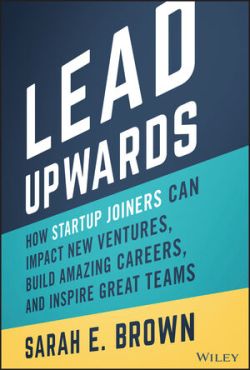
It’s an honor to officially introduce my next book, Lead Upwards: How Startup Joiners Can Impact New Ventures, Build Amazing Careers, and Inspire Great Teams, which will be published by Wiley in Spring 2022.

In Lead Upwards, readers will learn how to maximize impact and results in a startup leadership role. The book describes every step on the way to realizing your goals—and the goals of your startup—as you navigate the gap between a management role and the executive team. Learn what to do in your first 90 days, how to build and sustain a healthy team culture, and the art of communicating results to your leadership team and board.

You’ll also learn:

  • How to manage the challenges posed by leading a remote, distributed, or hybrid team
  • Management strategies based on inclusive and diverse teambuilding, alignment with business objectives, and inspirational leadership
  • Effective ways to level up your skills and stay current as your company grows

Written for current and aspiring execs and leaders at startups, Lead Upwards is also a guide for startup board members, founders, funders, and managers seeking an insightful discussion of business leadership. Available May 2022.

Order your copy

Startup Employees: Here’s What To Do If Your Startup Is Acquired

coffee-desk-notes-workspace

Imagine you’re working for a fifteen-person startup known for its tight-knit, values-driven, outdoorsy culture, and suddenly, one day, you’re pulled into an all-hands meeting letting you know that your company has just been acquired by a big company headquartered across the country. You may know a little or a lot about this company, but either way, very soon, you will become their employee.

For startup employees, an acquisition can be a nerve-wracking time due to the number of unknowns.

Some questions that may arise:

  • What will change, and will any of it markedly affect my work experience?
  • Will the parent (acquiring) company share the same values as my current startup?
  • Will my job become redundant and/or will I no longer be needed?
  • More immediately, what will happen to my PTO, benefits and will my spouse still be covered on my health insurance?

In addition to the potentially negative consequences of an acquisition, it’s important to remember that there can be many positive outcomes. For instance, you could get a promotion. Or perhaps you had equity that you could turn into cash in the acquisition. Regardless of whether you have equity, there may be an opportunity for you to leverage the value you bring to the transition to negotiate a nice windfall. Acquisitions and their resulting transitions can be highly emotional times, and no two acquisitions look quite the same. That being said, there are some ways you can empower yourself to make the most of an acquisition.

In 2015, Analiese Brown was the HR Manager at the time of acquisition of ShipCompliant, then an approximately forty-person self-funded, privately-held SaaS company headquartered in Boulder, CO. During the acquisition, Analiese’s role involved helping ShipCompliant through the transition, and much of her work centered around trying to help employees feel empowered throughout the process. Analiese oversaw changes in employee benefits, policies, and procedures such as well as the integration of HR systems and record-keeping with the acquiring company, Sovos. But Analiese also managed the “human” side of the transition, which involved helping employees grapple with the emotional elements of the transition. Read Analiese’s blog post sharing lessons learned from working at ShipCompliant.

“The CEO filled me in as it became more of a reality that it was going to happen,” said Analiese. “At that point, my focus became understanding  the acquiring company’s processes, employee benefits policies and handbook, and other things that might potentially affect our team once acquired.”

For Analiese, being on the team spearheading the integration was challenging; she oversaw details such as how to honor everyone’s time off balance and roll it over into the new policy, and also had to determine how to communicate the changes to employees. Analiese learned that the key to successfully navigating a startup acquisition as an employee is to focus on how you can shape what’s happening, and to find ways to re-frame it from something happening “to” you to something you have the power to shape to better your future.

Here’s what Analiese recommends if you’re a startup employee finding yourself in an acquisition scenario:

Upon learning of an imminent acquisition, take it upon yourself to learn as much as you can.

While there will be much that you don’t know and can’t know right away, obtain as much information as you can about the acquiring company. Research the acquiring company’s leadership, financials, and key customers and stakeholders. Editor’s note: You can search for recent press releases about them and check Crunchbase and Angellist to determine whether they’ve fundraised and/or if they plan to one day go public. Try to find out what happened when they bought another company; did the founders stay, and if so, how long? How many employees stayed?

Some of this information won’t be readily available, but you’d be surprised what you can dig up with some modern sleuthing. You can learn from internal resources, too. There might be a designated go-to person at your startup (the company being acquired) you can ask questions of who may be CEO of the company, startup’s founder, or whomever is managing HR or Finance. Whoever it is, there is probably some designated go-to resource you can look to who will be able to provide you with information to help you feel empowered, but remember they may not have all the answers or may be unable to share information one-on-one before announcing it to the whole group.

For as long as you’re planning on sticking around, commit to doing an outstanding job.

Don’t let the shifting sands environment of an acquisition be an excuse not to be a stellar performer. Keep up the great work — regardless of how long you plan to stay, you need to put in extra effort during this period because upon staying or leaving, you will have new people to impress either at the acquiring company or a new role very soon.

Sam Altman of Y Combinator says, “Most acquisitions are not smooth sailing. Go into it knowing it’s going to be hard.” Sam recommends employees wait at least six to nine months before making a decision that it’s not going to work (Source). In many cases, you’ll benefit from staying long enough to fully explore the opportunities present in an acquisition.

Empower yourself by becoming actively involved in the transition.

Your company may form a group of employees who are interested in shaping the transition. If there are ways to get involved, you’ll have access to information and will be in a place to shape the transition process. Every acquisition and integration is structured differently – the more you can be actively involved, the better chance you’ll feel positively about the outcome.

Sam Altman recommends adopting the mindset of “bridge builder”. “You don’t want two warring factions,” says Sam. “You want the new company to support you and you want people to like each other.” He advises making it your personal business to develop strong relationships with as many people as you can at the acquiring companies and be a bridge as tensions inevitably rise. (Source)

Give up on trying to keep things the same.

Things will change. That’s a given. The only thing you can control is what you do about the changes. Take time to mourn or celebrate the startup experience you had, and then roll up your sleeves, learn and decide whether you want to stay and/or if you need to go. Sam Altman says that often agreements will be reached with acquired companies to stay fairly autonomous, which can be a great thing if you already like your work and its processes.

“I would push the founders to make sure you got such an agreement to operate as independently as possible,” said Sam. (Source)

Unfortunately, even if such an agreement is reached, the reality of what “staying independent” looks like can be vastly different in each scenario. There may be certain processes like vacation time or required internal systems that will bend towards the parent company’s way of doing things. Figure out what will change as soon as that information becomes available.

Determine whether the new reality aligns with what’s important to you, and determine which things are non-negotiable for you.

Analiese recommends reading What Color Is Your Parachute?, a classic career discovery book, which can help you do the crucial work of discovering what’s important and what ultimately will be most fulfilling to you in your career.

Upon deciding to join the company, you probably have evaluated a number of factors that you’ll now have to re-evaluate. This includes: preferred geographic location, office environment you thrive in, and essential company values. Analiese says coming back to our own needs and desires provides a framework to evaluate whether the new reality of your acquired company will support and fulfill these things (or not). This personal inquiry is valuable regardless of whether you’re currently undergoing an acquisition, but is especially crucial when your company is experiencing major change.

Analiese reminds us that it is a human impulse to fear change. Figure out what’s important to you personally. Are you unwilling to move to a new city? Will you draw the line if the acquiring company doesn’t value inclusiveness?

If you have equity, understand how it works.

Understanding the impact to you as soon as you can will equip you with information about whether there’s a choice to be made, whether there’s an obligation to you around how that is paid out. If you don’t have equity you may feel the ship has sailed, but there may be some individuals who were very involved in transition or contributed heavily to the company’s success in the recent past  who may be then be in a position to be rewarded in some other way. That can be discretionary. It’s worth having the conversations. If in doubt, consider hiring a lawyer or business advisor who specializes in startup equity; you’ll be glad you did.

You may be acquired by a parent company with bonus or Management by Objectives (MBO) culture and if you’re in a key position, you can negotiate with the parent company for a favorable compensation structure or bonus. If you’re someone integral to transition, whether or not equity is part of your current compensation package, you may have some leverage.

Consider negotiating for a new role or a promotion.

If you’re planning to stay, once the shock wears off and people wrap their heads around what’s happening, incredible opportunities may surface. It may not even be something you have to ask for; you may see a restructure and be asked to take on a new role, or perhaps travel more or be based out of an office in a more desirable location. Analiese suggests looking for potential opportunities to learn and grow and develop as much as you can during an acquisition process. You may need to explicitly ask for a promotion if you’re being assigned more responsibilities or your role is being enhanced. Often larger companies acquiring smaller ones  may have more well-articulated career paths, or may look at the role you’re doing in a new way. At smaller companies, you may be a Jack or Jill of all trades, but upon acquisition, you may find that in this new reality, your multi-faceted role puts you a peg higher in an organizational chart.

You may also find that you are qualified to be in a higher-level role, and the acquiring company will likely have more funds or resources for learning and development. This may include going to conferences, workshops, or perhaps an internally-created leadership development program. There may also be more structured rewards and incentive program.

In the early post-deal stages, Analiese reminds us that it may not be totally clear what new career paths will be available or who will be impacted and how. Analiese says, in an ideal scenario, managers are a good first line of contact to ask for information and discuss how you’ll be impacted along the way. Hopefully, your manager will have the inside track (or be able to point you toward the right resources) to explore promotions or other opportunities.

Final Thoughts

If you’re facing an acquisition, adopt a learner’s mindset and find ways to become an active participant in the transition. Your goal is not to try to resist the change or preserve status quo, but to understand what the new scenario will be and to determine if the new company “reality” aligns with your values and needs.

If you’re resourceful, the acquisition of your startup can be an incredibly powerful catalyst for your career and personal development.