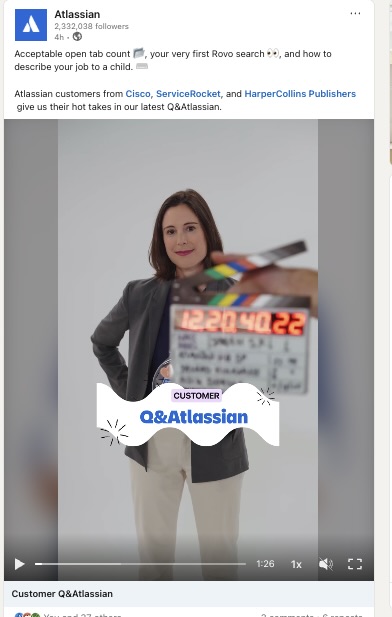
Q&Atlassian with Cisco, HarperCollins Publishers, and ServiceRocket
I was honored to recently join leaders from Cisco, HarperCollins Publishers, and ServiceRocket, including my colleagues, Founder and CEO Rob Castaneda and COO Colleen Blake, to give hot takes on Acceptable open tab count 📂, our very first Rovo searches 👀, and how to describe our jobs to a child ⌨️ in the latest Atlassian Q&Atlassian! Check it out
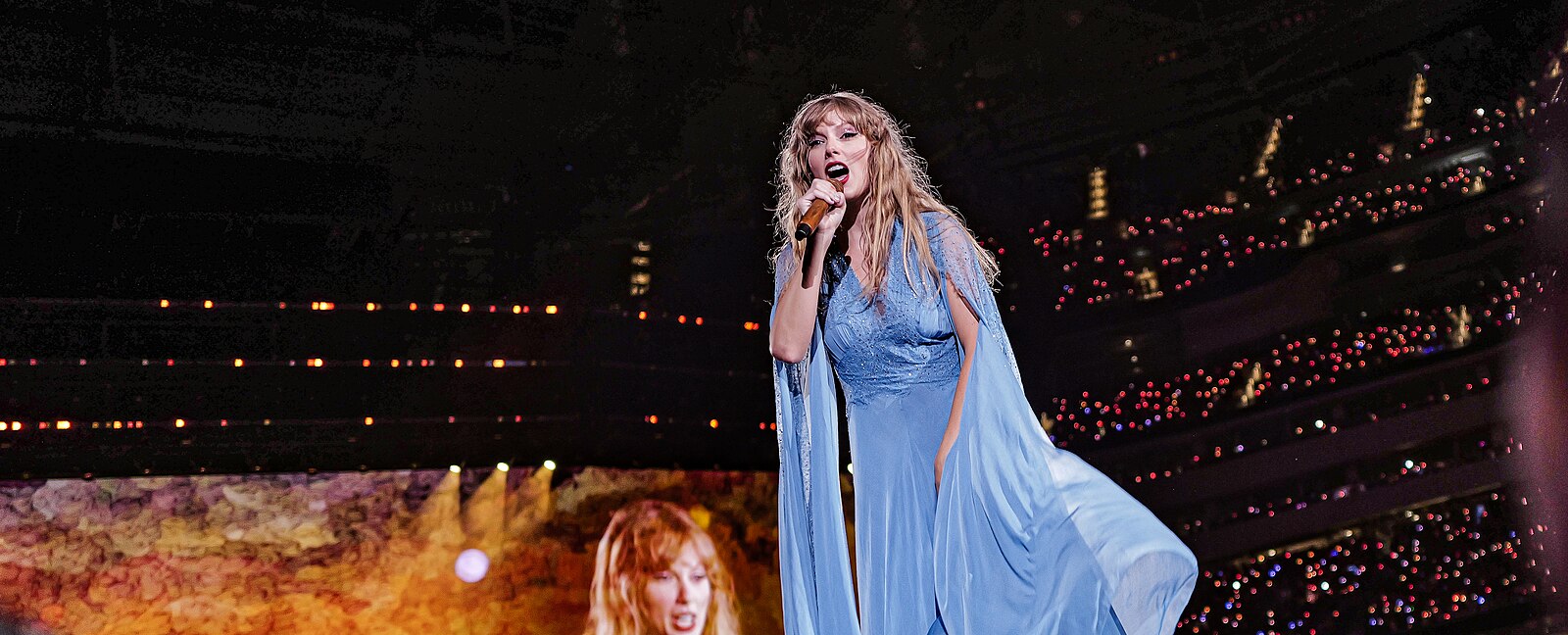
Taylor Swift during The Folklore set era of The Eras Tour, licensed CC-BY-2.0 (original by Paolo V).
Happy New Year! Many business leaders have rightfully commented over the years on Taylor Swift’s incredible business savvy. She is not a billionaire by accident. Over the winter holiday break, I watched the Taylor Swift Eras Tour Documentary on Disney+. In the series, I found some practical takeaways we can apply to B2B tech. Note: If you haven’t seen the series, and want to, this is your spoiler alert. Feel free to come back after you’ve seen it. If you’ve seen it already and/or don’t mind spoilers, here we go, in no particular order.
1. Be uncommonly generous with people in your org, including all levels of your org.
This was a through-line of the doc. Taylor is shown to give significant bonuses to everyone on the tour, including truck drivers, and there’s a scene where she gives her dancers and singers bonuses where some of them look like they could pass out. A lot of billionaires famously squeeze their staff, and she doesn’t do that. She is generous with her team. If you do the bare minimum for your people, you can find people who will show up for that. But if you give that something extra, and offer a really good work culture, your talent will reward you with magical returns.
2. Treat everyone on your team with deep respect, no matter their title or hierarchy.
You can have hierarchy within an organization while simultaneously having deep reverence for the value each person brings. Each episode of the doc follows different members of her organization, including her dancers, crew, backup singers, etc. One of her backup singers summed up this point succinctly, sharing how when she was at a party with Taylor, she was introduced as “we sing together.” She was clearly humbled and touched by this introduction, not leaning into hierarchy (“oh, she works for me”) but almost treating them as peers. I remember very early in my career when a former boss of mine introduced me to a friend of hers as a “colleague,” not “this person I manage.” That was noticeable.
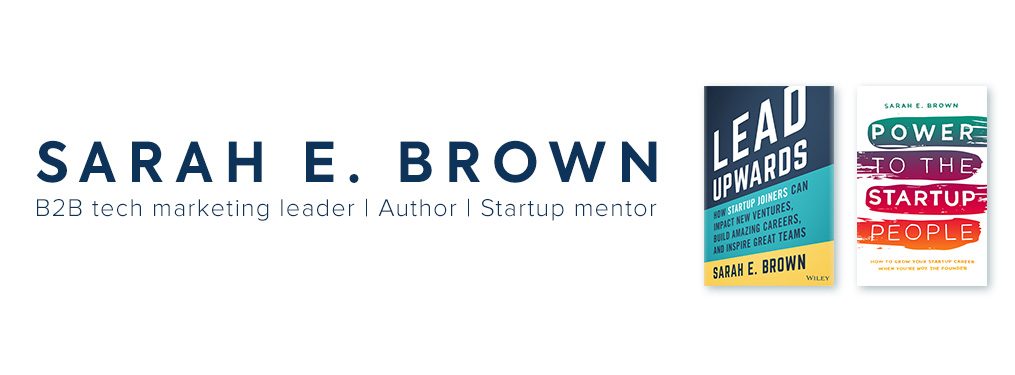
No founder can bring their vision to life without a team. This point is one of the main reasons I wrote my books Lead Upwards and Power to the Startup People, to put attention on non-founder employees who lead from every title and want to make an impact. Your team will do their best work when you honor and respect their unique contributions.
3. See talent where others can’t.
Taylor has dancers of every size, shape, and background. They all seemed so grateful to get to be themselves. I think of this with hiring great people who may have unconventional backgrounds or even just don’t fit the normative vision of what a role is. A great example of this is hiring someone from another industry who has the raw talent and can bring it to your industry. I worked with someone who was an exceptional field marketing and events leader in banking and then brought that expertise to B2B tech and did a phenomenal job at it. Don’t be limited, and you can get access to the best talent others miss.
4. When you find great people and enjoy working together, keep it going as long as you can.
I was struck by how many members of her band and crew had been with her for more than a decade. As a boomerang at my current company, ServiceRocket, one of the major reasons I returned was to work with great people I already knew, liked, trusted, and had deep respect for.
If you can find wonderful people and take new journeys together, that can feel shiny and new too. It’s really amazing to build depth and trust over that many years. If you find people who “get you,” you’re super lucky. We are all unique and have different aspects to us, so when you find people you click with at work, it is rare and important not to take that for granted. When you also create an environment where people can continue growing, learning, and improving their lives (seeing people in her band go on to have kids, buy dream homes, etc. shows you they are growing their own careers and lives as well as hers), they’ll stick around.
5. Build rituals to create big moments.
There’s a fun moment before each show we’re shown a few times, where someone says this chant that amounts to “f-ck sh*t up, f-ck it up, up, up!” and it’s just this joyful rallying cry. Whether you huddle before a conference tradeshow or a big launch, or just take a moment to bring your energy together as a group—say, before a cloud migration go-live—it’s powerful to build that moment. Chip and Dan Heath wrote a book about this called The Power of Moments.
6. Seek to see potential in people they don’t see in themselves.
Amanda Balen, one of Taylor’s dancers and choreographers, had been brought on to do choreography work, and in the doc it became clear she’d previously had a super accomplished dancing career but had retired from performing herself. Dancers can’t do it forever as human bodies have realities. Taylor convinced her she still had dancing in her and got her to dance again. Be the kind of boss and leader who sees that kernel of talent in someone on your team and is the first to call it out and invest in it. Amanda wasn’t auditioning to be a dancer, but Taylor saw her potential. I think she’s amazing in the concert (I watched the concert in full on Disney+).
7. Don’t get too comfortable. Lean into surprises and always be looking for opportunities to drive innovation.
This is advice for every business: don’t rest on your laurels. After doing the show for many months, Taylor switched it up to release new content for her new album, and she brings in guest performers frequently. She’s clearly committed to bringing as much value and newness to the show as possible. That’s awesome advice for all of us.
8. Work really hard as an individual contributor as well as an orchestrator of everyone else’s productivity.
Somehow the idea that becoming a leader is all about everyone else “below you” in the org doing the work, and now you can simply manage it all, became popular somehow, maybe with The 4-Hour Workweek (although Tim Ferriss, I understand, works super hard himself). Put in effort as an IC just as much as you expect others around you to.
9. Bring loved ones along for the journey.
I love the moment where Taylor admits in the doc she woke up with a cat on her head. Clearly she can afford a cat sitter, but she chose to bring her cats with her on tour. They bring her joy, obviously. Her whole family seems to work for her, and she brought her fiancé, Travis Kelce, to do work on the show with her. Bringing loved ones along for the ride seems like a great lesson for business leaders. There is no need to fully separate personal and professional (while having appropriate boundaries). She also honors her grandmother’s legacy (her grandmother was a singer) and includes her in the show in the song “Marjorie.”
10. Allow your people to be human and don’t turn your back on them if they fall down.
This is a big one for the US, where we can be highly transactional, and in many states it is legal to give employees no paid sick leave, etc. Taylor’s backup singer got diagnosed with cancer while on the tour. She gave an emotional testimony that Taylor’s team kept her employed, insured, and welcomed her back as soon as she was able. That is apparently, unfortunately, uncommon for that industry. When your people are struggling, if you’re able to support them when they’re not okay (within appropriate boundaries for your company and the team member) and you don’t turn your back them immediately, it’s not only the right thing to do; it’s also good business. You can bet that backup singer came back more passionate about giving her all to the show than ever.
11. Be vulnerable and honor your emotions without letting them stop the show.
A lot of people depend on Taylor Swift for their livelihood. I appreciated the early episodes where she was filled with emotion about a tragedy and safety concerns about potential terrorism at her shows in Europe. She feels upset and allows it, but then contains it because the show must go on. She seems to have that balance between being a human with feelings and knowing her responsibility to show up and contain things where needed. Insanely powerful.
12. Identify and invest in outstanding partnerships.
No one puts on a stadium tour that disrupts local economies and even creates earthquakes (look it up) without tons of partnerships with local governments and organizations. To make a tour of this magnitude, Taylor collaborated with them (or her people did), and she also collaborates with legendary songwriters and producers Max Martin and Shellback to make her new album. Finding great partners who can have your back is crucial for business.
13. Be all about craft.
Taylor’s people are clearly the best at what they do in the world, and they’re dedicated to it. She says it’s no accident they all came together; they’d been “tectonic plates” and had been working their whole lives to be in that position. ServiceRocket Founder and CEO Rob Castaneda inspires me with how he thinks about craft and finding people who become very skilled at what they do and love it and become master craftspeople. Do this in business to build a competitive advantage.
Give First is foremost a guide on how to be an effective mentor. As a co-founder of Techstars, Feld shares origin stories (including a fun anecdote about how a random 15-minute meeting with David Cohen in 2006 led to the founding of Techstars).
As a former (and maybe future?) resident of Boulder, CO, I love how intimate the stories are, many of which are from Boulder. I also appreciate how Feld shares deeply moving stories about mentors in his life who have become peers, like his mentor Len Fassler, who taught him invaluable business and life lessons. “Suit up. They can’t kill you, and they can’t eat you. We’ll get through it,” is one of my favorite lines in the book. Something for us all to remember when the startup world feels challenging.
The book explores the Techstars Mentor Manifesto which David Cohen created in 2011 after running multiple Techstars accelerator programs and working with hundreds of mentors. (Note: Techstars now supports thousands of founders worldwide with thousands of mentors. I am honored to be one of them! Apparently, according to the book, more than 20,000 people list “Techstars Mentor” on their LinkedIn profiles.)
The book explains how the “Give First” philosophy—giving without expectation of specific returns—is essential to building a thriving startup ecosystem. Moving away from transactional interactions toward relationship-building has benefited me personally, and I’ve seen it change lives. Feld has invested deeply in the Boulder community and supported me personally (my book Lead Upwards was published by Wiley thanks to Feld; we share an editor and he made the intro). He has also supported my first book and the tech inclusion meetup I founded in Boulder, Flatirons Tech, back in 2013. My story is also the story of thousands of others who have been touched by Feld’s “Give First” philosophy.
The Give First philosophy encourages us to contribute time, resources, and expertise without expecting immediate returns. Something Feld shares in the book is that this goes beyond the “Pay it Forward” mentality, showing you how to adopt a continuous, optimistic, and empathetic mindset in your professional life. As Feld defines it in the book, “Give First means being willing to put energy into a relationship or a system without defining the transactional parameters.”
The book also addresses navigating the challenges of Give First, including avoiding burnout and setting appropriate boundaries. It concludes with a section on “Entrepreneurial Tzedakah,” connecting the Give First philosophy to philanthropic giving through initiatives like Pledge 1% and the Techstars Foundation.
Give First feels empowering, necessary, and right. Regardless of whether you consider yourself or plan to become a “mentor,” the philosophy is pretty life-changing and can be beneficial for anyone (even beyond the startup ecosystem). Pre-order your copy.
Note: I’ve been honored to mentor multiple companies as a Lead Mentor in the Techstars Workforce Development Accelerator, including two in the current cohort. Catch Brad Feld’s Give First book launch at the accelerator Demo Day on June 5th. RSVP details here.
When I became a mentor at Techstars, a leading accelerator with a presence around the world, I learned its manifesto “give first,” which means to give without an expectation of receiving (knowing we mentors will still likely receive a lot from the experience). I didn’t realize how important this was to my startup philosophy until I encountered ecosystems where that mentality wasn’t the case. It made me understand that generosity without expectation is truly the lifeblood of a successful startup ecosystem. There is so much to learn and limited resources to accomplish a startup’s mission and goals.
MENTORSHIP POWERS THE STARTUP ECOSYSTEM
I know what mentorship means both to myself as a mentor and to the founders with whom I have had the privilege of interacting. Techstars says that mentor relationships almost always become two-way. That’s definitely been true for me as I have been a lead mentor in Techstars Sustainability, Oakland Powered by J.P. Morgan, and Workforce Development accelerators.
One founder I mentored invited me to his baby shower two years after our mentorship relationship officially ended, and we regularly talk about life, relationships, as well as the startup world. Another mentor and I have a more formal relationship, but we have stayed in touch long after his program ended, and I consider all three of these founders as friends. They’ve helped me with life topics as much as I’ve helped their companies with their go-to-market strategies. That’s the gift of mentoring; whether you’re aiming to give or receive, know that it’ll be something that goes both ways.
MENTORSHIP IS ABOUT KNOWLEDGE AND CHEMISTRY
Mergelane co-founder Sue Heilbronner says a good mentor–mentee relationship needs personal connection and chemistry.
“Once you get through specific content and facts like ‘this person has great experience in finance’ and ‘this person could use some bolstering in their knowledge in this area,’ the connection is the thing,” says Heilbronner.
“Mentees are most successful when they think about identifying mentors as people who are already in their world with whom they have a big connection; it’s true for mentors also. We have formal structures in accelerators, incubators, and that’s all fantastic as a way to facilitate and enhance the power of mentorship, but informal opportunities can be very meaningful.”
MENTORS DON’T HAVE TO KNOW ALL OF THE ANSWERS
I’ve learned as a mentor to ask good questions and be open to how the recipient wants to navigate their answers, releasing ideas of how I think they “should” handle a situation, and trusting them to be the best judge of their own course of action. Mentors can advise and provide guidance but don’t oversteer. There’s great power in also knowing that when I receive mentorship, I can choose to listen to what resonates and discard the rest.
For example, I once was talking to a founder about a challenge with one of his co-founders around their average sales price (ASP) and how he was feeling about their difference of opinion. I didn’t try to tell him what to do or even push him to decide what action to take. I had my own opinion about what ASP would work best for their target market, but that wasn’t what he needed. Instead of pushing an agenda, I was there to listen to what he wanted to share on the topic and come to his own answers.
He ended up solving his problem by engaging a coach to facilitate some difficult conversations with him and his co-founder about their company vision and how they wanted to go to market. He found our chats helpful to clarify his own needs and thinking. I’m proud that they took these insights into their next successful fundraising event, now on the same page about the why behind their pricing strategy.
PURSUE MENTORSHIP THAT PROMOTES EQUALITY
Trier Bryant is Co-Founder and CEO of Just Work, a strategic executive leader with distinctive Tech, Wall Street, and military experience spanning over 15 years. She’s previously held leadership roles at Astra, Twitter, Goldman Sachs, and served as a combat veteran in the United States Air Force as a Captain leading engineering teams while spearheading diversity, equity, and inclusion (DEI) initiatives for the Air Force Academy, Air Force, and DoD. She says that as a Black woman, finding mentors who “guide her the same as a white man” is important.
SIGN UP TO MENTOR AT AN ACCELERATOR
I’ve learned so much from mentoring at Techstars accelerators and deeply value those relationships. I proudly use my swag from their orgs and refer other mentors regularly who could be a good fit for the programs. If you want to get involved with mentoring in a more formal way, offering your departmental expertise and/or industry expertise to founders at an accelerator is a great avenue.
At Techstars, we first meet the founders of each cohort and hear their pitches in what’s called “Mentor Madness.” It’s basically a half-day of hearing back-to-back conversations where you get to see if you both have chemistry. Whether in-person or virtual, I always end the day exhausted, because I’m an introvert, and it requires being “on” with a lot of new people in one day. Yet it’s satisfying to get to help early stage founders and companies find their way.
I mentor at Oakland Powered by J.P. Morgan and Workforce Development accelerators at Techstars. There are now many accelerators around the world that specialize in different things and markets. Chances are, there’s an accelerator near you that includes companies tackling something you care about and can provide value to. It’s worth a shot if you feel it would be fulfilling.
MENTOR THROUGH AN OFFICIAL ORGANIZATION
Mentor Spaces founder Chris Motley believes in mentorship’s power to transform lives. Through his platform, professionals from underrepresented backgrounds can support others and get support for their own career growth. Motley’s organization works with the National Black MBA Association (NBMBAA) and other organizations. Other organizations to consider becoming a mentor at include Lesbians Who Tech, Girls Who Code, and other affinity groups.
FIND COMMUNITY AND SHARE MUTUAL SUPPORT AS A “PEER MENTOR”
Nicole Wojno Smith says finding peers and building a supportive community around you is paramount to finding and succeeding in an exec role.
“The biggest thing that I’ve found is that it’s lonely,” says Smith. “Most of the time, your CEO expects you to know how to do the job. You can’t really go to them and say, hey, I really don’t know how to do this. When you were director, you had your VP to ask these questions or you might have had three other peers on the same level that you could just chat with about some of this. It’s kind of like overnight some of that goes away,” says Smith.
Smith asks her global group of CMO peers how to handle situations, sending them messages when in doubt (and fielding them from others). When she owned a new function within marketing recently, she turned to this group for counsel, and they are always willing to get on calls or answer messages to help her succeed.
AFFINITY ORGANIZATIONS
Having people whom you can trust to turn to outside of your company when you don’t know something or just need support is crucial, especially if you’re a member of an under-represented minority. Groups like People of Color in Tech, Lesbians Who Tech, or other affinity groups can help you find like-minded peers and mentors with whom you can draw and give support. Scale-up startups often have organizations like Employee Resource Groups (ERGs) around identities like LGBTQ+, Latinx, Black in Tech, Women in Tech, and more that you can join and be a part of.
Recently, I had the honor and privilege of joining VC, Techstars co-founder, and author Brad Feld to discuss our perspectives on startup leadership and career development to empower the next generation of startup leaders.
From the beginning, Brad has been an incredibly generous supporter of my books focused on startup employees, Power to the Startup Peopleand Lead Upwards. I am grateful to get to learn and benefit from Brad’s work focused on building startup communities and ecosystems, both locally in Colorado and globally.
Brad has written many excellent books; two of my favorites, Startup Communitiesand The Startup Community Way, have particularly influenced my perspectives on how to foster more inclusive, diverse startup ecosystems.
Our fireside chat explored what it takes to build diverse startup communities and the role of startup employees in thriving startup ecosystems. Our discussion covered many topics that will hopefully resonate with many startup joiners who are interested in growing their careers and getting more involved in the ecosystem.
In Startup Communities and his follow up book The Startup Community Way, Feld sheds light on the ingredients for successful startup communities and how to cultivate diverse and thriving ecosystems.
As the winter holiday season kicks off, I’m still smiling from a fireside chat I had the privilege of co-hosting a few weeks ago with the one and only startup CEO and author Matt Blumberg and the fantastic team at Bolster, including Cathy Hawley and Andrea Ponchione.
I’ve long admired Matt and his work and have dogeared copies of each of his books on my shelves, including the excellent new Second Edition of Startup Boards by Brad Feld, Mahendra Ramsinghani, and Matt Blumberg.
As a primer for startup leaders who want to succeed in their functions, and for startup CEOs and others who want to better manage their CXOs/build functions up, Startup CXO is an invaluable resource. I wrote Lead Upwards hoping that it would be a helpful way finder for people like me – growing startup executives who want to make an impact. CXO is an essential exec startup leadership functional guide, and our books as companion reading just makes sense.
Matt, the Bolster team, and I had the idea to host our session as a fireside chat in order to explicitly put our experiences and our books in conversation, calling it “Startup Leadership: Startup CXO Meets Lead Upwards,” tackling topics for startup leaders like:
Career Progression – creative paths/journeys we’ve seen to the executive level in startups and why those paths work.
“Managing the CEO” – As a startup leader, how do you manage the work relationship with your CEO? As a CEO, how do you attune to your teams and decide the cases it’s time they attune to you? Is it certain roles that must attune to you (ex. An EA) but your direct reports you learn their styles?
How to quit as a CXO or let a CXO go – Two weeks’ notice is not the way to go, as Matt and I agree. Executives can’t just up and quit with “two weeks’ notice” — AND executives need to be mentally prepared to be shown the door when they resign. Also, as a CEO, how do you know when an exec isn’t scaling or working out? How do you think about exiting them from the business?
I hope you enjoy these as a part of your holiday reading for yourself or perhaps as a gift to your team. Full disclosure: Matt and I share the same incredible editorial team at Wiley (shout-out to Bill Falloon and the team). Happy holidays!
P.S. Matt recently published a generous and thoughtful review of Lead Upwards on his fantastic blog. Check it out
I recently finished reading the new second edition of Startup Boards: A Field Guide to Building and Leading an Effective Board of Directors by Brad Feld, Mahendra Ramsinghani, and Matt Blumberg. I loved it. It is a highly useful tome for startup operators and investors alike. I found it to be particularly helpful in preparation for a recent board meeting.
Many startup leaders can relate to the flurry of activity prior to a board meeting; the data collection, the slide preparation, the cross-functional alignment meetings, and the presentation prep itself. The new edition of Startup Boards is packed with useful insights, including board fundamentals (what is a board’s purpose, and what are the roles and responsibilities of members?), steps towards creating inclusive boards, and the overall background on how boards can have a role in important company milestones like fundraising, selling or buying a company, IPOs, or closing down the business.
Startup Boards has great advice for independent or aspiring board directors. As we work towards making boards more diverse and inclusive, this is something our entire industry can benefit from.
As an LGBTQ woman startup executive, this particularly resonates with me, as I am often still the “only” person or one of a handful from a minoritized group at board meetings. Thankfully, things are changing. We all need to work towards making boards more inclusive and effective.
In my book Lead Upwards, I included a chapter for startup leaders on how to prepare for and present at board meetings, including advice from investors, seasoned CEOs, and executives. I’ve previously referenced the first edition of Startup Boards as recommended reading. The new edition is even better and more helpful for aspiring and current startup execs to be successful in their board communication.
Startup Boards is a must-read to understand the “why” behind the board meetings, the board priorities, and the structures that are present at your startup. Highly recommended reading. Get your copy.
The book describes every step on the way to realizing your goals—and the goals of your startup—as you navigate the gap between a management role and the executive team. It covers what to do in your first 90 days, how to build and sustain a healthy team culture, and the art of communicating results to your leadership team and board. You’ll also learn:
How to manage the challenges posed by leading a remote, distributed, or hybrid team
Management strategies based on inclusive and diverse teambuilding, alignment with business objectives, and inspirational leadership
Effective ways to level up your skills and stay current as your company grows
Written for current and aspiring executives at startup firms, Lead Upwards is also a guide for startup board members, founders, funders, and managers seeking a singularly insightful discussion of business leadership. Available now!
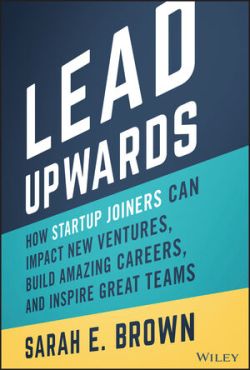
In Lead Upwards, readers will learn how to maximize impact and results in a startup leadership role. The book describes every step on the way to realizing your goals—and the goals of your startup—as you navigate the gap between a management role and the executive team. Learn what to do in your first 90 days, how to build and sustain a healthy team culture, and the art of communicating results to your leadership team and board.
You’ll also learn:
How to manage the challenges posed by leading a remote, distributed, or hybrid team
Management strategies based on inclusive and diverse teambuilding, alignment with business objectives, and inspirational leadership
Effective ways to level up your skills and stay current as your company grows
Written for current and aspiring execs and leaders at startups, Lead Upwards is also a guide for startup board members, founders, funders, and managers seeking an insightful discussion of business leadership. Available May 2022.





 Sarah E. Brown | Sarah Brown Marketing